

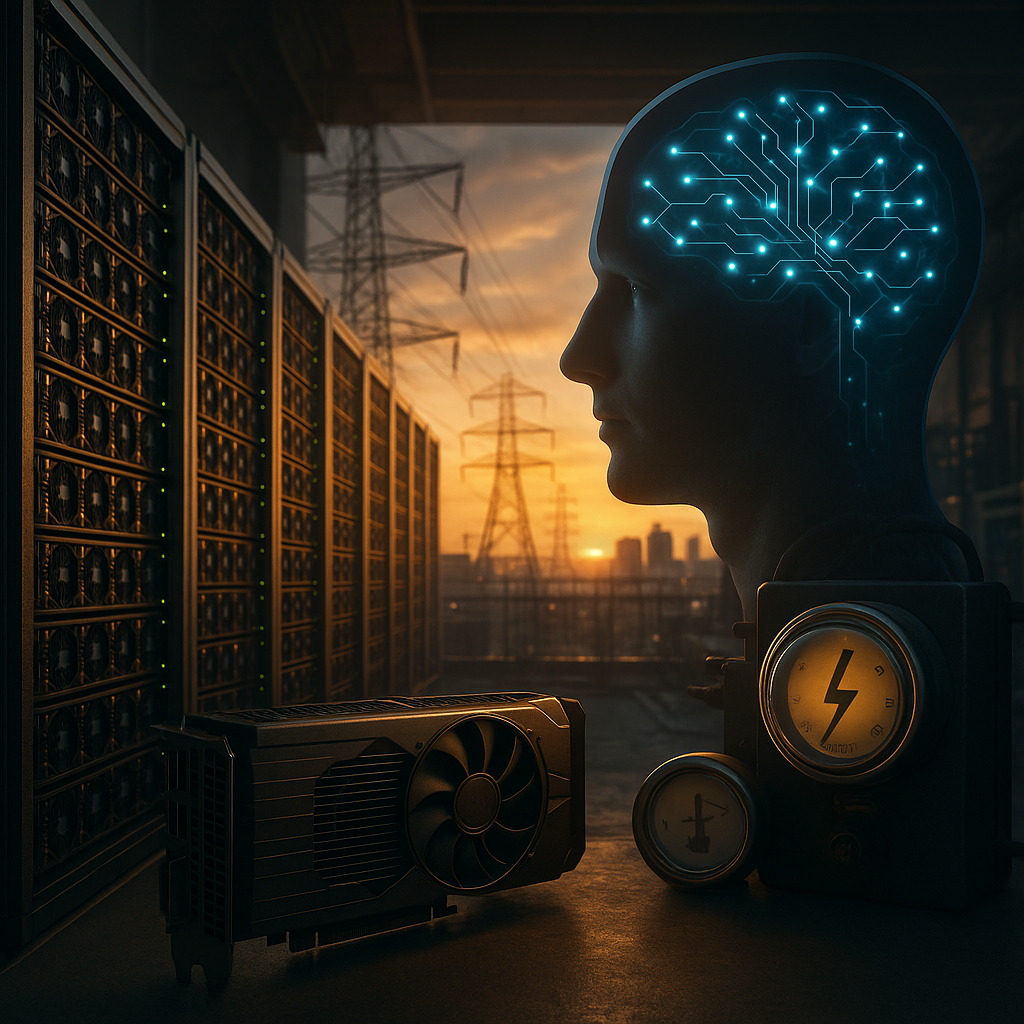

Everyone is talking about artificial intelligence — the models, the breakthroughs, the products.
But the real story of this decade isn’t who’s building AI; it’s who’s powering it.
Behind every chatbot, multimodal model, or autonomous agent lies a massive infrastructure challenge data centers, chips, energy, and optimization layers that make intelligence possible. And that’s where the next trillion-dollar opportunity is unfolding.
In 2025, more than half of all global venture capital flowed into AI-related ventures and much of it went not to flashy front-end startups, but to infrastructure enablers. Companies like Crusoe, Lambda Labs, and Fireworks AI are redefining the backbone of artificial intelligence building scalable, energy-efficient inference platforms that run the models the world depends on.
These firms don’t sell chatbots; they sell the possibility of chatbots. While most startups chase applications, infrastructure players build the rails of intelligence — systems that every future AI company will rely on. Their moat isn’t hype, it’s physics: whoever controls compute, energy, and latency, controls AI’s future.
And with global demand for computation exploding, the race is shifting from “Who can build smarter models?” to “Who can power them sustainably?”. AI data centers now consume more electricity than some nations, sparking a massive pivot toward clean energy compute. Companies are experimenting with carbon-neutral GPU clusters, modular cooling, and renewable-powered inference hubs turning sustainability from a moral checkbox into a strategic advantage.
The message is clear: in the age of intelligent capital, energy and infrastructure are the new code. Investors are waking up to this reality. The biggest rounds of 2025 weren’t raised by app-layer startups, but by those solving the compute bottleneck. Infrastructure scales with every innovation above it, compounding value over time. It’s the digital version of railroads, electricity, and cloud combined and the smartest capital knows it.
As the AI boom matures, winners will no longer be defined by how smart their algorithms are, but by how efficiently they can be run, powered, and delivered to billions. The next unicorns won’t just build intelligence — they’ll fuel it.