


Introduction
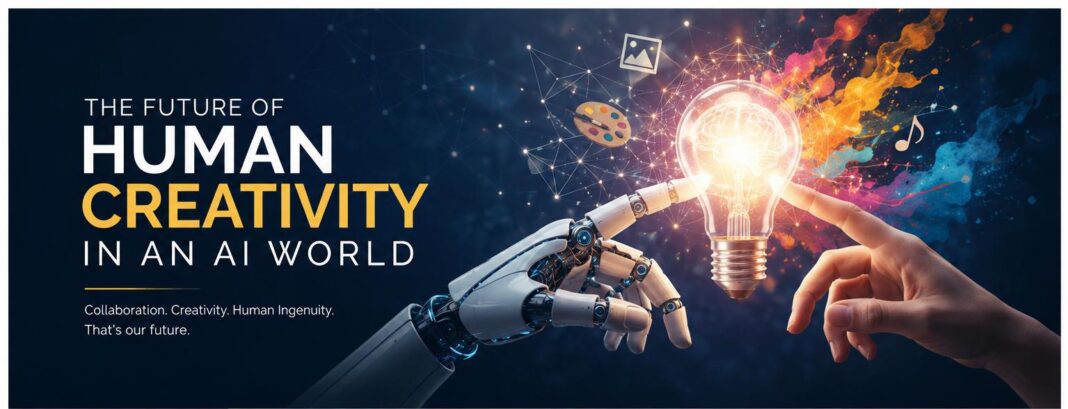
Artificial intelligence is no longer futuristic.Today AI can do anything such as composing music, writing articles, generating designs and products , AI has entered in all domain , As AI-powered tools become more advanced, many people wonder: Will AI replace human creativity?
Well the answer is complex
AI may transform creative processes but it cannot replace the human spark behind meaningful ideas , the future will be defined by collaboration between human and Ai
What is the future of human creativity in an AI-driven world?
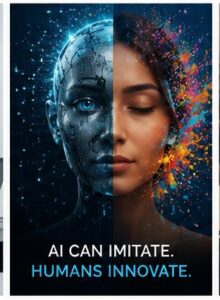
People fear that AI will replace many jobs while some believe that AI is an powerful partner that enhances creativity and innovation and the reality lies somewhere in between , in this blog , we explore how AI is reshaping creativity, the opportunities and challenges it presents, and why human creativity may become more valuable than ever before.
The rise of AI powered creativity
Over the years AI has rooted it’s presence as a strong creative partner generative AI systems can now create designs, write blogs, compose music etc. The adoption of AI is growing rapidly according to recent research generative AI usage among working-age adults increased significantly during 2025, demonstrating how quickly these tools are becoming part of everyday workflows.
The rise of Human – AI collaboration
Rather than replacing creativity,AI is transforming how creativity works -Writers can use AI for research and brainstorming. Designers can generate multiple concepts in seconds. Marketers can analyze trends more efficiently.This allows professionals to spend less time on repetitive tasks and more time on strategy, innovation, and storytelling.The future belongs to those who collaborate with AI for better results.
Why human Creativity Will Become More Valuable
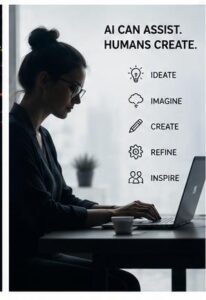
Ironically AI generated content floods the internet and originality becomes increasingly rare.People connect with real stories, unique perspectives, and human experiences. These are areas where humans continue to have a significant advantage.As AI handles routine content generation, human creativity will become a key differentiator for businesses and individuals alike.
Skills for the future
As AI becomes more capable, certain human skills will become increasingly valuable: creative thinking, critical thinking, emotional intelligence, storytelling, adaptability.
Challenges ahead
The AI revolution is not without concerns.
Many workers worry about job displacement as automation expands into creative and knowledge-based professions. Recent surveys show growing public concern about AI’s impact on employment and workforce transformation.
Additional challenges include: Intellectual property issues, Misinformation and deepfakes, Creative homogenization, Overreliance on AI tools, Ethical concerns surrounding AI-generated content
Addressing these challenges will require responsible AI development, digital literacy, and strong ethical frameworks.
Conclusion
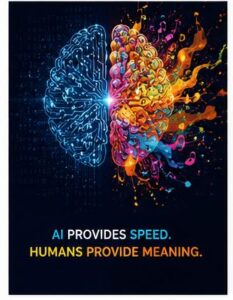
The future of creativity is not a competition between humans and machines. It is a partnership. AI will continue to transform how we create, making creative work faster and more efficient. However, imagination, empathy, intuition, and original thinking remain deeply human strengths. In the years ahead, the creators who thrive will be those who embrace AI as a tool while continuing to cultivate the qualities that make human creativity unique.
The future of creativity is not artificial—it is human, enhanced by technology and driven by imagination.