


Introduction
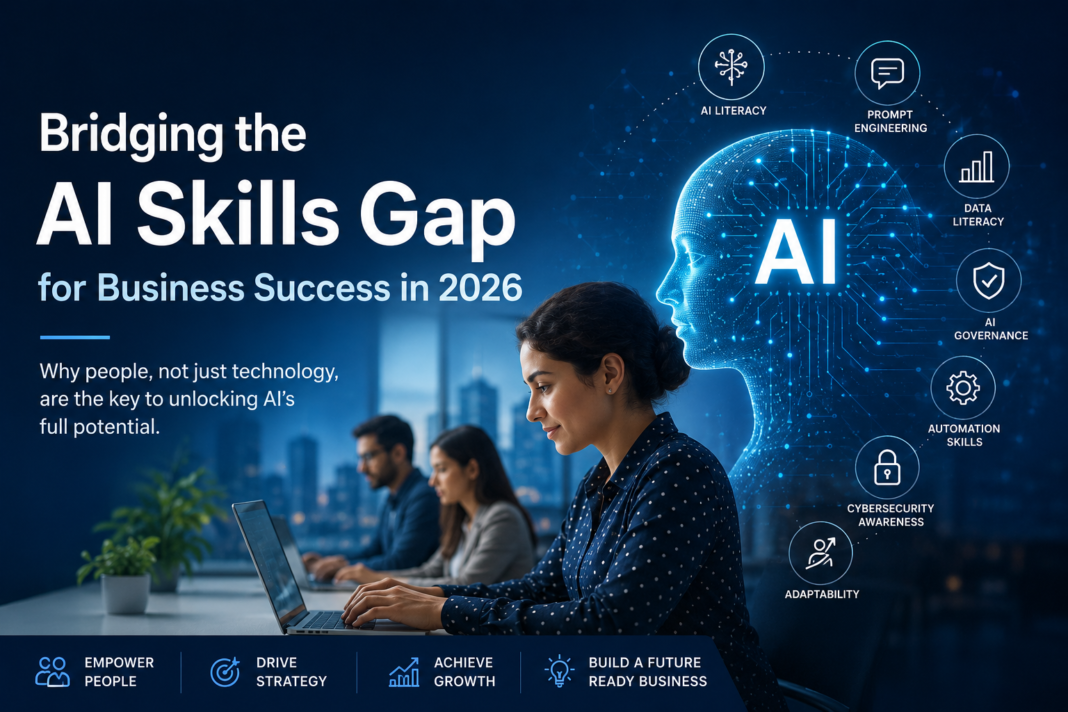
AI is transforming the way businesses operate, but technology alone isn’t enough. As companies accelerate AI adoption, they’re facing a growing shortage of professionals who can work alongside these tools. In 2026, success will depend less on having the most advanced AI and more on building teams that know how to use it strategically.
understanding the Ai skill gap
The AI skills gap is the growing disconnect between the AI capabilities businesses need and the skills available in today’s workforce. As AI adoption accelerates across industries, organizations are struggling to find employees who can effectively use, manage, and integrate AI into everyday operations. Success with AI now depends as much on people as it does on technology.
Why Technical Expertise Alone Isn’t Enough
AI success depends on more than technical expertise. Businesses need people who can connect AI with real business goals, think critically about AI outputs, collaborate across departments, and adapt as technology evolves. The strongest AI professionals blend technical skills with business and strategic insight.
The Skills Businesses Should Prioritize in 2026
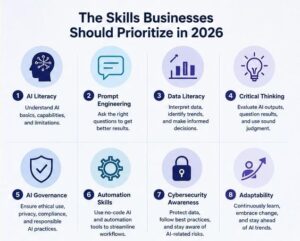
1. AI Literacy-Understanding AI is becoming a core workplace skill. Employees should know what AI can do, where it adds value, and when human judgment is still essential.
2. Prompt Engineering-Getting the best results from AI depends on asking the right questions. Employees who can write effective prompts and integrate AI into daily workflows can significantly improve productivity.
3. Data Literacy- AI relies on quality data. Businesses need people who can interpret insights, identify trends, and make informed, data-driven decisions.
4. Critical Thinking-AI isn’t always accurate. Employees must verify information, question AI-generated outputs, and use sound judgment before making decisions.
5. AI Governance-As AI adoption grows, organizations need professionals who understand ethics, privacy, compliance, and responsible AI practices to manage risks effectively.
6. Automation Skills-No-code AI and automation tools allow teams to streamline repetitive tasks. Employees who can identify and automate routine work create immediate business value.
7. Cybersecurity Awareness-With AI handling more business data, employees should follow security best practices, protect sensitive information, and recognize AI-related risks.
8. Adaptability-AI is evolving rapidly. The most valuable employees will be those who continuously learn, adapt to new technologies, and embrace change.
AI in Action: How Businesses Are Using It Today
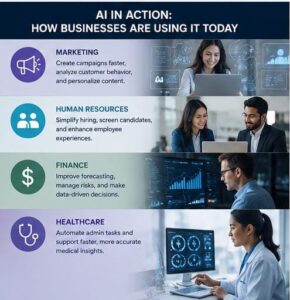
AI is already transforming how organizations operate across industries. Rather than limiting AI to technical experts, companies are enabling employees in every department to use AI-powered tools in their daily work.
Marketing professionals generate creative campaigns faster. HR teams simplify hiring and improve employee experiences. Finance departments make better forecasting decisions with AI-driven insights, while healthcare professionals automate routine administrative work and receive support for medical analysis.
The message is clear: AI is becoming an essential workplace skill, regardless of job title.
Closing the AI Skills Gap
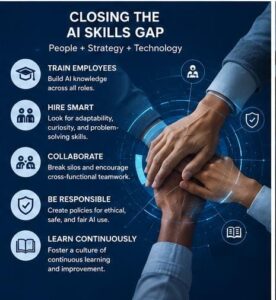
Businesses can bridge the AI skills gap by investing in people as much as technology.
.Train employees to use AI effectively.
.Hire adaptable, curious problem-solvers.
.Foster collaboration across departments.
.Create responsible AI policies.
.Build a culture of continuous learning.
The Future of Hiring
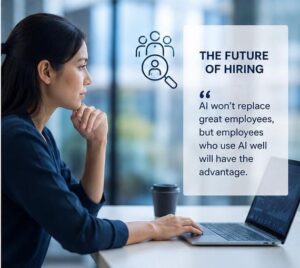
AI won’t replace great employees, but employees who use AI well will have an advantage. The future belongs to professionals who blend AI skills with critical thinking, creativity, and business insight to drive meaningful results.
Conclusion
AI is transforming business, but success depends on people, not just technology. Organizations that invest in AI skills, adaptability, and responsible AI use will be better prepared to innovate and stay competitive. In 2026, the biggest advantage belongs to businesses that empower their workforce to use AI effectively.