


Introduction
There is a strange feeling that comes with seeing something from your childhood after many years. It could be an old packet of biscuits, a familiar cartoon character, a childhood toy, a video game, or even the packaging of a drink you used to have during summer vacations. For a moment, the present seems to disappear. You remember the people, places and small routines that once felt ordinary but now seem incredibly precious. Brands have noticed this feeling. And increasingly, they are learning how to turn it into a business.
From fast-food chains and fashion companies to entertainment brands and packaged food companies, businesses are bringing back old products, characters, designs and experiences to connect with consumers. What appears to be a simple trip down memory lane is actually becoming a sophisticated marketing strategy. Nostalgia has become a way for brands to create emotional connections at a time when consumers are surrounded by endless choices and constantly changing trends.
What Exactly Is Nostalgia Marketing?
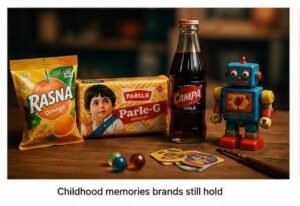
Nostalgia marketing works on a simple human truth: they buy them for what those things remind them of. A familiar chocolate may bring back memories of spending a few coins at the local shop after school. An old restaurant dish might remind someone of family dinners. A retro jacket can take a person back to the fashion they loved as a teenager. In each case, the product is only part of the story. The emotion attached to it is what makes the experience powerful. That is essentially what nostalgia marketing does. Brands borrow elements from the past—old packaging, characters, advertisements, music, designs, products or cultural moments—and use them to create an emotional connection with today’s consumers. This emotional approach can have a real impact on consumer behavior. Research has associated nostalgic advertising with stronger emotional responses, more positive attitudes toward brands and greater purchase intentions. Studies involving Indian consumers have also examined the relationship between nostalgia, emotional attachment, brand loyalty and purchase decisions. The appeal is understandable. A new product has to introduce itself to consumers. An old product may already have a story in their minds.
The Millennial Connection: Growing Up Before Everything Went Digital
Millennials experienced a particularly unusual cultural transition. They grew up during the shift from an offline world to a permanently connected one. Their childhoods often involved scheduled television, physical photographs, CDs, DVDs, printed magazines and face-to-face socializing. Their adulthood, meanwhile, has been shaped by smartphones, streaming platforms, instant messaging and social media.
That contrast matters.
Digital convenience has made life faster, but it has also made experiences more continuous. There is always another notification, another video, another message or another update waiting. Nostalgia offers an escape from that constant movement.
A familiar brand can act almost like a shortcut to memory. Seeing an old snack, hearing a familiar advertisement jingle or recognizing packaging from childhood can bring an entire period of life back to the surface. For marketers, this creates an important competitive advantage. History becomes an asset. A younger brand can create a compelling identity, but an established brand may possess something much harder to reproduce memories that consumers have already built around it.
Gen Z and the Rise of Second-Hand Nostalgia
Gen Z has changed the meaning of nostalgia.
For millennials, nostalgia often comes from direct memories. For Gen Z, it can also come from cultural discovery. The generation has embraced everything from Y2K clothing and retro gaming to digital cameras, flip phones, early internet aesthetics and old social-media trends. Some of these references come from a time Gen Z barely remembers—or never experienced at all. The internet has made this possible.
Platforms such as TikTok, Instagram and YouTube constantly recycle older cultural material. A song from years ago can suddenly become popular again. A forgotten fashion trend can become desirable. An old phone can be presented not as outdated technology but as an aesthetic object. This creates what might be called “second-hand nostalgia”: an emotional attraction to a past experienced through photographs, videos, music, family stories and online culture. For younger consumers, the past can therefore represent more than memory. It can represent an alternative to the speed and sameness of modern digital life. And that is precisely where nostalgia marketing becomes particularly powerful. Brands are not simply asking Gen Z to remember. They are inviting them to imagine what the past felt like.
McDonald’s Repackaged a Childhood Ritual for Adults
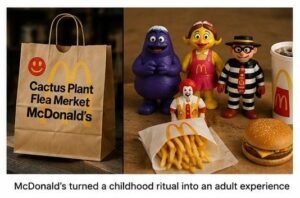
McDonald’s demonstrated the commercial potential of nostalgia in 2022 through its collaboration with Cactus Plant Flea Market. Rather than simply reintroducing a discontinued product, the partnership recreated the broader Happy Meal experience for an adult audience.
The campaign combined McDonald’s food with collectible figurines based on familiar characters including Grimace, the Hamburglar and Birdie. These characters had already occupied a place in the childhood memories of many consumers, making the collaboration instantly recognizable. The appeal came from the ritual surrounding the Happy Meal. As children, consumers were not only receiving food; they were experiencing the anticipation of opening the box and discovering which toy they had received. By bringing back the collectible element, McDonald’s recreated that sense of surprise in a format designed for adults. This distinction matters. Effective nostalgia marketing is rarely about copying the past exactly. Instead, it identifies the emotional experience that made something memorable and finds a contemporary way to reproduce it.
McDonald’s effectively transformed a childhood ritual into an adult cultural product, demonstrating how brands can monetize memories without simply repeating old products.
Barbie Turned Childhood Memories into a Global Conversation
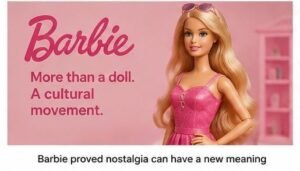
Barbie offers another strong example of how a familiar childhood brand can become relevant to an entirely new generation. When Greta Gerwig’s Barbie arrived in 2023, the character was already deeply embedded in popular culture. For many millennials, Barbie was a familiar part of childhood, while younger audiences knew the character through toys, entertainment and decades of cultural visibility. The movie took that familiarity and gave it a completely different meaning. Barbie was no longer just something people remembered from childhood. She became the Centre of conversations about identity, expectations, femininity, relationships and modern culture.
The impact quickly spread beyond the movie itself. Barbie-inspired fashion, merchandise, brand collaborations and real-world experiences appeared everywhere, while the distinctive pink aesthetic dominated social media and popular culture. What made the phenomenon especially interesting was that Barbie wasn’t simply asking adults to go back to their childhood. It was allowing them to look at something familiar from a completely different perspective. That is where nostalgia becomes particularly powerful for brands. A memory can bring people back, but a new interpretation gives them a reason to stay engaged.
India Has Its Own Nostalgia Economy
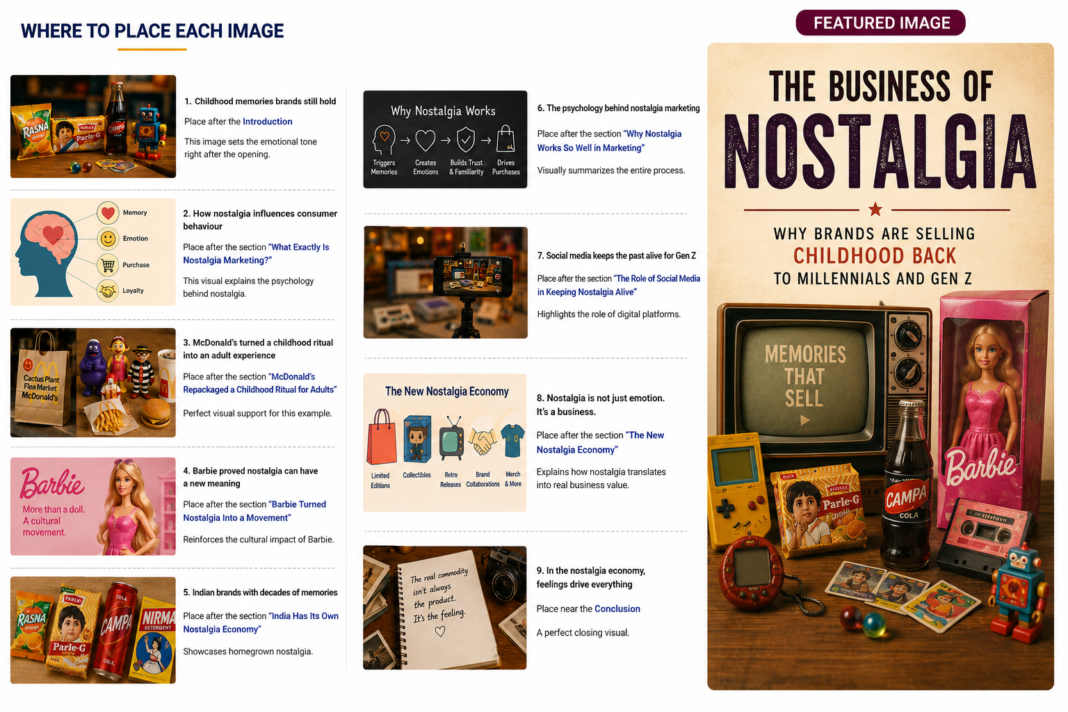
India’s relationship with brands often begins long before people become conscious consumers. For millions of Indians, certain products are tied to childhood homes, school breaks, family outings and ordinary moments that became memorable with time. Brands such as Rasna, Parle-G, Campa Cola, Nirma and classic Cadbury products have therefore become much more than things people buy from a shop. They have become part of people’s memories. Take Rasna. For many people, the brand immediately brings back images of summer afternoons, guests arriving at home and a large jug of chilled drink being prepared for everyone. The product itself may be simple, but the memories surrounding it are not.
Parle-G has a similar place in Indian households, although its emotional association is somewhat different. Its familiar yellow-and-blue packaging, distinctive biscuit and long-running presence have made it one of those products that many generations recognise. For some, it is connected to childhood snacks; for others, it may bring back memories of travelling, school tiffin or tea with family.
This is where India’s nostalgia economy becomes interesting. Brands that have existed for decades already possess something that newer companies have to work hard to create familiarity. Consumers have encountered them through different stages of life, and that repeated exposure can eventually become an emotional relationship. Studies on nostalgia marketing among Indian consumers have also explored its relationship with factors such as emotional attachment, brand loyalty, trust, repurchase behavior and recommendations. In a market where several household brands have survived across generations, those emotional connections can become commercially significant.
Why Nostalgia Works So Well in Marketing

People don’t always buy products because they are the cheapest, newest or most technologically advanced option. Sometimes, they buy something because it feels familiar.
That is the real strength of nostalgia.
A nostalgic product can remind consumers of a particular period in their lives and create an emotional response that a list of product features cannot easily reproduce. Someone might see an old packet of biscuits and suddenly remember sitting in their grandmother’s house. A familiar advertisement might remind another person of watching television after school.These reactions happen because nostalgia creates a connection between the present and the past. People’s lives may change dramatically over time. They may move to another city, start a career, build a family or develop completely different tastes. Yet certain memories remain surprisingly easy to trigger.
For established brands, this creates a major advantage. A new company has to introduce itself, prove its value and gradually earn consumer trust. A brand that has existed for decades may already have an emotional history with its customers.In other words, nostalgia gives brands a head start.They are not simply asking consumers to try something new. They are reminding them of something they already know.
Social Media Has Made Nostalgia More Powerful
Nostalgia used to be something people experienced privately. Today, social media has turned it into something people experience together.A photograph of an old chocolate wrapper can become a viral post. A forgotten television advertisement can suddenly reappear on Instagram or YouTube. Someone can post an old school snack and ask, “Who remembers this?” Within hours, hundreds of people may respond with their own stories.
That interaction gives nostalgia a different kind of power.
Consumers are no longer simply watching a brand’s nostalgia campaign. They are adding their own memories to it. One person might remember eating a particular snack after school, while another remembers taking it on train journeys with their family.The brand becomes the starting point for a larger conversation. This works particularly well because memories are often strengthened through sharing. A product becomes more emotionally meaningful when people discover that others remember it in similar ways. What began as one person’s childhood memory can quickly become a shared cultural reference.
For brands, this is incredibly valuable. Social media allows them to move nostalgia beyond traditional advertising and into conversations, memes, videos, comments and user-generated content. The audience doesn’t just consume the campaign. They help keep the memory alive.
The New Nostalgia Economy
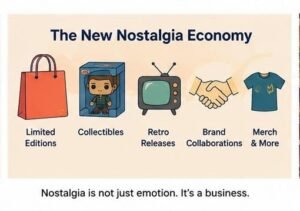
At its heart, nostalgia marketing is not really about selling old products. It is about selling the emotion attached to them. A biscuit can remind someone of tea at their grandparents’ house. A cartoon character can bring back memories of rushing home from school to watch television. A particular soft drink can transport someone to summer holidays. Even an old toy can represent a time when entertainment did not require a smartphone or an internet connection. The product is only the physical object. The memory is what gives it meaning.
Brands cannot manufacture someone’s childhood memories. They can, however, create products, campaigns and experiences that activate those memories. That is why nostalgia has become such an attractive strategy in modern marketing. Consumers today are surrounded by constant change. New technologies appear, trends disappear and products are replaced at an incredible speed. In that environment, familiarity can become valuable in itself. Sometimes people don’t want the newest thing. They want something that feels known. That may explain why forgotten products suddenly return to supermarket shelves, why old advertisements resurface online and why characters from previous decades become fashionable again.
Behind these campaigns is a simple idea: people may be willing to spend money on something that gives them a brief connection to a version of themselves they remember fondly. In that sense, the real commodity in the nostalgia economy isn’t always the product. It is the feeling. And sometimes, what consumers are really buying is a small reminder of who they used to be.