Deepfake Fraud: Protecting Businesses in the AI Era

Introduction

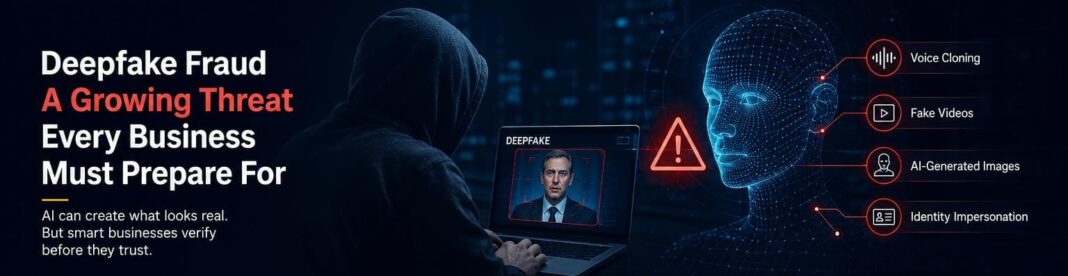
Artificial Intelligence is driving innovation across industries, helping businesses automate tasks, improve customer experiences, and make smarter decisions. At the same time, AI is fueling a new wave of cyber threats, with deepfake fraud becoming one of the fastest-growing concerns. As deepfake technology becomes more accessible, cybercriminals are exploiting it to commit financial fraud, steal sensitive information, and damage corporate reputations. For businesses, understanding and preparing for this emerging threat is now a critical aspect of cybersecurity.

What is Deepfake fraud?

Deepfake fraud is an emerging cybersecurity threat that uses artificial intelligence to impersonate trusted individuals. By generating convincing voices, videos, images, and audio, attackers manipulate employees into making financial transactions, revealing confidential information, or granting unauthorized access.

Common examples include:

  • AI-generated voices that closely mimic a CEO or senior executive.
  • Fake video meetings where company leaders appear to give instructions.
  • AI-created profile photos used to build convincing fake identities.
  • Manipulated audio recordings that misrepresent conversations or statements.

Because these creations can look and sound remarkably authentic, they are becoming an increasingly serious threat to businesses.

How Cybercriminals Use Deepfake Technology Against Businesses
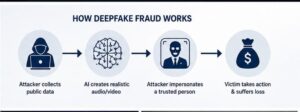
Deepfake fraud is rapidly becoming one of the biggest cybersecurity challenges for modern organizations. By using artificial intelligence to imitate real people, attackers can deceive employees, bypass verification processes, and steal valuable assets.


CEO Voice Cloning Scams

AI-generated voices are used to impersonate company executives and request urgent financial transfers or confidential business information.

Fake Employees and Identity Theft

Deepfake videos and forged digital identities enable cybercriminals to pose as legitimate job applicants, contractors, or business partners.

Sophisticated Phishing Attacks

Scammers enhance traditional phishing campaigns with realistic voice messages and video clips, making fraudulent emails much harder to recognize.

Credential Theft Through Social Engineering

Attackers use convincing AI-generated conversations to persuade employees into revealing passwords, sensitive documents, or access credentials.

What’s Driving the Rise of Deepfake Fraud?

The rapid adoption of artificial intelligence has brought tremendous business opportunities,but it has also created new opportunities for cybercriminals.

Affordable AI software now enables attackers to generate realistic fake voices and videos with minimal effort. Even short audio clips shared on social media or during online meetings can be enough to clone someone’s voice. Meanwhile, organizations increasingly depend on remote communication, digital approvals, and virtual meetings, creating more opportunities for impersonation attacks. As deepfake technology becomes more sophisticated, businesses can no longer rely solely on visual or audio cues to verify someone’s identity. Strong verification processes are now essential.

Warning Signs of a Deepfake

Although modern deepfakes are highly realistic, businesses should watch for potential red flags:

  • Requests for urgent financial transactions.
  • Pressure to bypass standard approval processes.
  • Slightly unnatural facial movements or lip synchronization during video calls.
  • Unusual speech patterns or robotic pauses.
  • Requests made through unfamiliar communication channels.
  • Unexpected changes in payment instructions.

No single sign guarantees a deepfake, but multiple warning signals should always trigger verification

How businesses can protect themselves

Build Strong Verification Protocols

One of the most effective ways to prevent deepfake fraud is to establish strict verification procedures. Important financial decisions and sensitive approvals should always require multiple levels of confirmation rather than relying on a single phone or video call.

Make Cybersecurity Training a Priority

Your employees are your strongest defense against AI-powered scams. Regular awareness programs should teach staff how to recognize deepfake videos, cloned voices, and other forms of digital impersonation.

Secure Every Account with MFA

Multi-Factor Authentication dramatically reduces the risk of unauthorized access. Even if attackers successfully imitate an executive or obtain login credentials, MFA provides an additional security barrier.

Verify Every Sensitive Request

Whether it’s a request for a bank transfer, confidential company information, or login credentials, businesses should always confirm its authenticity through a separate communication channel before proceeding.

Adopt AI-Powered Deepfake Detection

The same technology used to create deepfakes can also help detect them. AI-enabled security tools analyze audio, video, and images for signs of manipulation, helping organizations stop attacks before they succeed.

Protect Your Digital Footprint

Publicly available interviews, webinars, social media posts, and executive speeches provide valuable training material for deepfake models. Regularly monitoring and managing these digital assets can help minimize the risk of impersonation attacks.

The Role of AI in Combating Deepfake Fraud

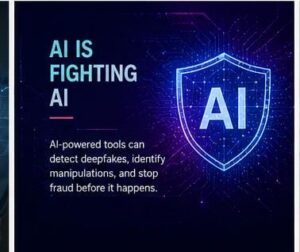
While artificial intelligence has enabled the rise of deepfake fraud, it is also becoming one of the most effective tools for preventing it. Modern AI-powered security solutions can detect subtle facial inconsistencies, recognize synthetic voices, identify manipulated videos, and monitor unusual communication patterns in real time. As cybercriminals continue to refine their tactics, businesses are increasingly turning to AI-driven cybersecurity systems to detect threats faster and strengthen their defenses.

Building a Deepfake-Ready Organization

Technology alone cannot eliminate the risk of deepfake fraud. Organizations need a combination of secure processes, employee awareness, and advanced security tools.

A strong security culture encourages employees to verify unusual requests, report suspicious communications, and follow established approval workflows—even when instructions appear to come from senior leadership.

In the AI era, trust should always be supported by verification.

Final Thoughts

Deepfake fraud is no longer a futuristic concern—it is a real and growing threat affecting businesses across industries. As AI-generated content becomes increasingly convincing, organizations must adapt their cybersecurity strategies to address this new challenge.

Businesses that invest in employee training, stronger verification procedures, and AI-powered security tools will be far better equipped to prevent financial loss, protect sensitive information, and maintain customer trust.

In today’s digital world, the smartest defense isn’t just trusting what you see or hear—it’s verifying it.


Latest news

All Categories

Related Posts