

Introduction
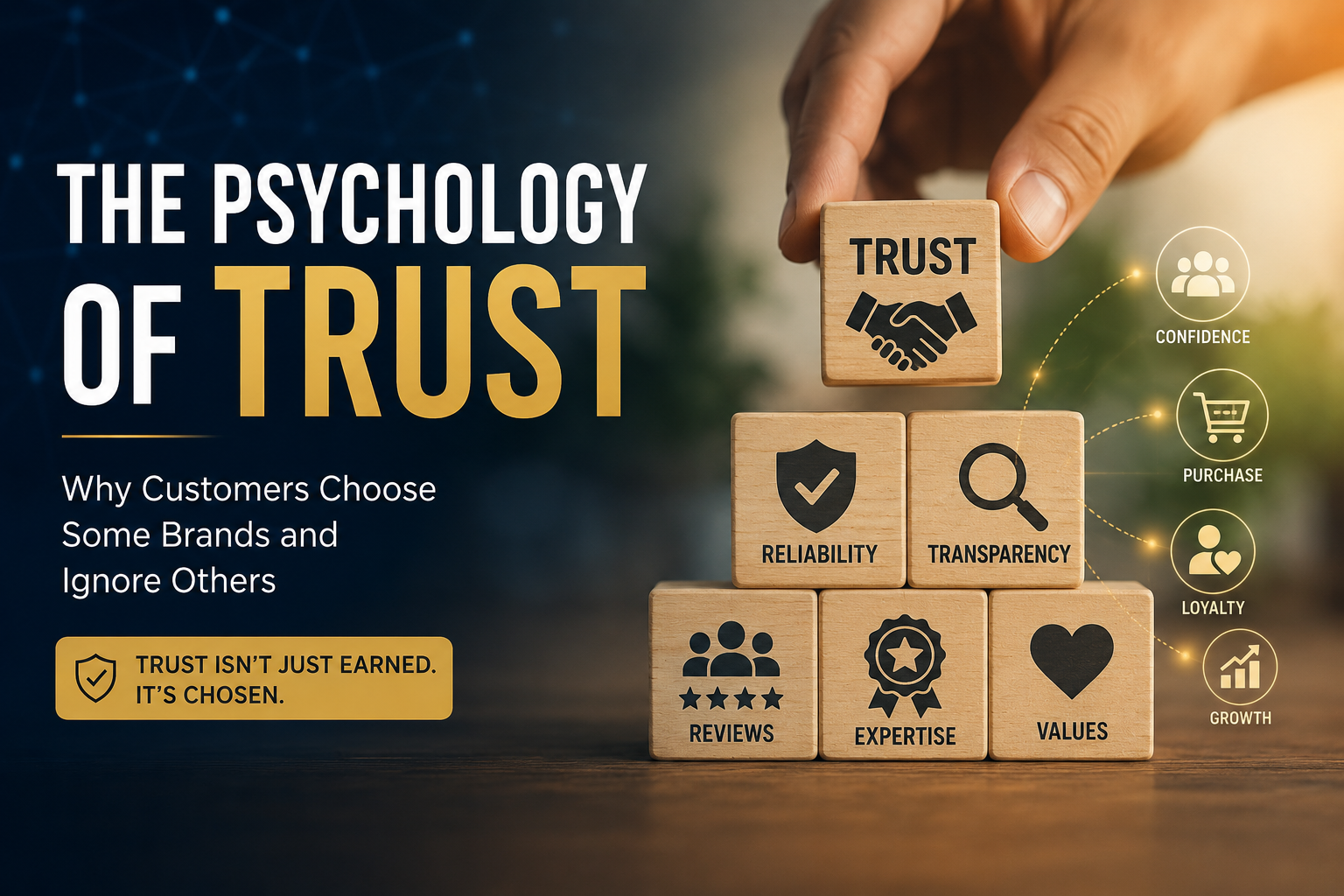
Modern consumers have more choices than ever before. A single online search can present hundreds of alternatives, while social media introduces new brands almost every day. In such a crowded marketplace, attracting attention is no longer the greatest challenge—earning trust is.Trust has become one of the most influential factors in consumer decision-making. Before making a purchase, people unconsciously evaluate whether a brand appears credible, reliable, and capable of delivering on its promises. This assessment often carries more weight than discounts, flashy advertising, or even product specifications.
Brands that consistently communicate honesty, transparency, and reliability develop stronger customer relationships over time. Those that fail to establish trust often struggle to convert interest into lasting loyalty, regardless of how innovative their products may be.
Exploring the psychology behind trust helps businesses understand not only why customers buy but also why they stay loyal long after the first purchase.
Why Trust Is the Real Currency Behind Every Purchase

Price influences buying decisions, but trust often determines them. No customer wants to waste money on a product that doesn’t work or buy from a company that disappears after the sale. Before making a purchase, people instinctively evaluate the risks. They wonder whether the product will meet expectations, whether customer support will be helpful, whether their payment details are secure, and whether the business will honor its promises. Trust eases these concerns by reducing uncertainty. Instead of scrutinizing every detail, customers rely on signs of credibility—such as authentic reviews, transparent policies, consistent communication, and a proven reputation.
The Edelman Trust Barometer 2025 reinforces this reality, showing that businesses continue to rank among the world’s most trusted institutions. Consumers increasingly choose brands that demonstrate competence, honesty, and accountability over those that simply market themselves well. In today’s crowded marketplace, is the foundation that supports every successful purchase.
The Psychology Behind Customer Trust
Trust is rooted in human psychology. Behavioral research shows that people rarely evaluate every purchase with perfect logic. Instead, they often rely on mental shortcuts, emotions, and past experiences to make decisions quickly.
Psychologist and Nobel laureate Daniel Kahneman described this through his theory of System 1 (fast, intuitive thinking) and System 2 (slow, analytical thinking). When a brand has already earned a customer’s trust, the brain sees less uncertainty, allowing faster and more confident decisions. Rather than comparing every available option, customers naturally return to brands they already believe in. In many cases, trust becomes the deciding factor even when competitors offer similar products or lower prices.
Ultimately, trust reduces decision fatigue and makes purchasing feel safer

1. Predictability Creates Trust
People feel comfortable with businesses that consistently meet their expectations. Whether it’s product quality, customer support, pricing, or communication, predictable experiences reduce uncertainty and encourage repeat purchases. Customers don’t want surprises when they buy from a trusted brand—they want confidence that today’s experience will match yesterdays.
Example
Apple has maintained customer confidence by delivering a familiar ecosystem, dependable software updates, and consistent design standards across its products.
When customers know what to expect, they hesitate less before buying.
2. Transparency Strengthens Credibility
Customers don’t expect companies to be perfect—they expect them to be honest.Being transparent means clearly communicating important information, such as:
- Pricing
- Return policies
- Product limitations
- Delivery updates
- Privacy and security practices
Businesses that openly explain challenges instead of hiding them tend to build stronger customer relationships.
Example
Patagonia has built lasting trust by openly discussing its environmental impact, sourcing practices, and sustainability efforts. Its willingness to share both achievements and ongoing challenges has reinforced its credibility.
Honesty creates confidence because customers appreciate knowing exactly what they’re buying.
3. Other People’s Experiences Influence Decisions
Buying decisions are heavily influenced by what others think. When customers feel uncertain, they naturally seek reassurance through reviews, ratings, testimonials, and recommendations. Positive feedback from existing customers reduces perceived risk and increases confidence in a purchase.
Example
A restaurant with thousands of positive reviews immediately appears more reliable than one with no customer feedback, even if both offer similar food.
Seeing others trust a business encourages new customers to do the same.
4. Demonstrating Knowledge Builds Authority
Customers trust businesses that prove they understand their field. Sharing useful insights through educational content helps companies establish credibility long before asking customers to make a purchase. Authority grows when businesses consistently provide value rather than promotional messages alone.
Example
HubSpot built a loyal global audience by publishing comprehensive marketing guides, research, and educational resources that help businesses solve real problems.
Teaching customers often earns more trust than selling to them.
5. Shared Values Strengthen Relationships
Customers are more likely to support brands that reflect their beliefs and priorities.Whether those values involve innovation, sustainability, community, or social impact, alignment creates a deeper emotional connection than product features alone.these emotional bonds make customer loyalty more resilient over time.
Example
Nike inspires millions by celebrating perseverance, determination, and personal growth. Customers connect with the brand’s message as much as its products.
People remember how brands make them feel.
6. Dependability Turns Buyers into Loyal Customers

Trust isn’t earned through promises—it grows through consistent delivery.Businesses that meet deadlines, resolve issues efficiently, honor guarantees, and provide dependable service gradually build stronger customer relationships.Each positive interaction reinforces the belief that the business can be relied upon.Subscription-based companies understand this well because retaining customers depends on consistently delivering value.
Reliability transforms satisfaction into loyalty.
7. Genuine Brands Stand Out
Consumers are increasingly drawn to businesses that communicate honestly instead of trying to appear perfect. Showing the people behind the company, acknowledging mistakes, and sharing authentic customer experiences makes a brand more relatable. Authenticity creates human connections that polished marketing alone cannot achieve.
Today’s customers aren’t looking for flawless businesses—they’re looking for trustworthy ones.
Why Customers Choose to Ignore Certain Brands
Trust isn’t always lost through dramatic failures. More often, it fades because of small inconsistencies that collectively create doubt. An outdated website, inconsistent branding, vague pricing, missing customer reviews, poor support, or unclear messaging may seem insignificant on their own. Together, however, they signal uncertainty. Consumers rarely investigate every detail. Instead, they make rapid judgments based on the overall impression a brand creates. If that impression feels unreliable, they simply move on.
The Cost of Losing Trust
Trust is one of the most valuable assets a business can build, but it is also one of the easiest to lose. A single disappointing experience can quickly spread through online reviews, social media, and word-of-mouth recommendations, reaching far beyond the original customer. According to PwC, trust is a significant factor in purchasing decisions, and repeated negative experiences often lead consumers to abandon a brand entirely, regardless of past satisfaction. Rebuilding a damaged reputation requires sustained effort, consistent performance, and far greater investment than maintaining customer confidence in the first place.
How Businesses Can Build Trust in 2026 and Beyond

Today’s consumers expect more than polished advertisements and persuasive marketing campaigns. They want businesses that consistently deliver on their promises, communicate openly, and prioritize customer needs. Brands that provide valuable educational content, respond quickly to concerns, safeguard customer data, and remain transparent about pricing and policies are more likely to earn lasting credibility. Trust also grows when businesses showcase authentic customer experiences, demonstrate genuine expertise, and reveal the people behind the brand. Ultimately, trust is not created through a single campaign—it is built through countless positive interactions that consistently reinforce reliability over time.
Real-World Example: Why Trust Wins Even When Products Are Similar
Suppose you’re shopping online for a skincare serum. Two brands appear almost identical in price, ingredients, and promised benefits. One website clearly explains how the product works, showcases genuine customer experiences, provides accessible support, and displays transparent shipping and return policies. The other website offers only basic descriptions, has no visible customer feedback, and leaves several questions unanswered.Most shoppers would instinctively choose the first option. While both products might deliver similar results, the first brand communicates professionalism and credibility from the very first interaction.
This illustrates an important marketing principle: customers don’t just evaluate the product—they evaluate the confidence they feel about purchasing it.
ConclusionBuilding trust is a continuous process rather than a one-time achievement. Every fulfilled promise, every honest conversation, and every positive customer experience strengthen a brand’s reputation.As consumer expectations continue to rise, businesses that place transparency and authenticity at the center of their strategy will stand out in competitive markets. Trust encourages customers to return, recommend the brand to others, and remain loyal even when alternatives exist.
Ultimately, the strongest brands aren’t always those with the most advertising—they’re the ones customers believe in.