

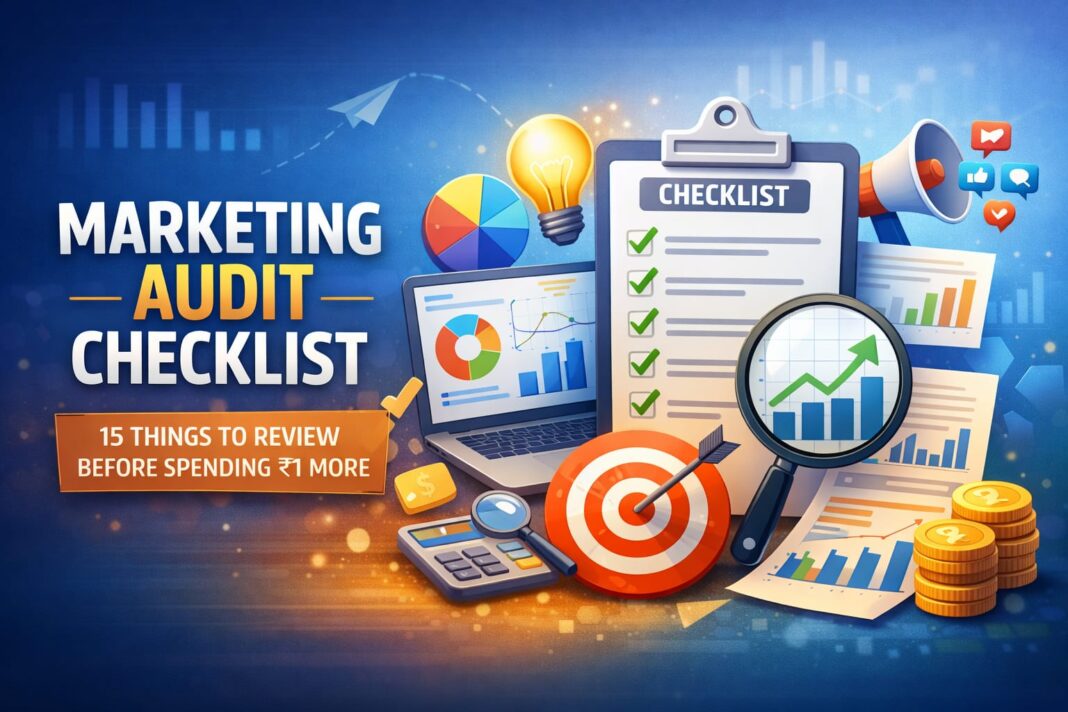

Marketing Audit Checklist: Things You Must Check Before Spending ₹1 More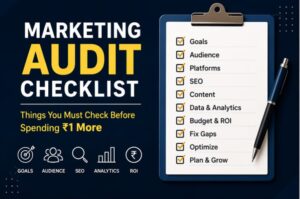
Are you someone who is planning to increase your marketing budget?
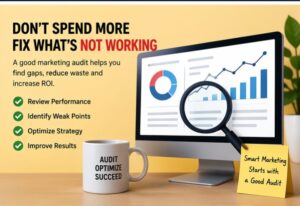
Read this before spending ₹1 more, Many businesses don’t go for marketing audits, but analyzing spending is a very important step. A marketing audit helps to analyze how everything is working and where your money is actually going. So, before you increase your budget, run a quick marketing audit, let’s break it down step by step.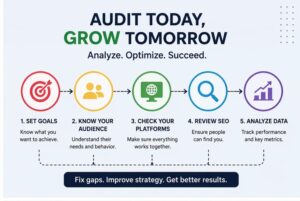
1. A clear goal
Make sure you’re clear with your goals
What are you aiming for?
More sales?
More leads?
More website traffic?
For example – if you’re focusing on sales, and you’re just tracking likes and followers it means you’re analyzing the wrong thing.
2. Understand your audience
You need to understand your audience, whom you’re talking to, are they your deal customer? Are your services fulfilling their demands?
For example – if your product is expensive only ads, promotions may not get a good number of converts— webinars, detailed blogs build more trust.
3. Check your platforms
Your websites and social media handles should convert visitors, make sure that you’re posting valuable content.
For example – if your visitors cannot find your information within two clicks, they will lose interest and leave— customers won’t stay if they have to hunt for what they need.
4. Look at your SEO.
Checking your SEO is one of the most powerful long- term strategies.
Look at
. Is your content optimized?
. Are people finding you on Google?
. Are you ranking for relevant keywords?
For Example – if you’re a financial advisor but you haven’t updated your LinkedIn profile in two years, you’re losing credibility with potential clients who are vetting you before they ever pick the phone.
5. Analyze your content
Whatever you’re posting it should be valuable and relevant — your content makes impact on the customers
Check—Which post, blogs or videos are performing best?
For example – if polls are getting more responses, use polls to gather more feedback and boost your visibility.
6. Review your social media platforms
Focus on those platforms which are getting more traffic
Ask:
. Which platform is bringing more results
. Where you’re getting more traffic
For example – if your Instagram is getting more traffic no converts, but your website is getting more converts adjust your strategy accordingly.
7. Evaluate your marketing funnel
Analyze your customer’s journey
Spot the gap — analyze the exact exit point
Smooth the road – eliminate friction
TIP- high visit + low sales= landing page or pricing issue.
8.Track your Data properly
Your data tells the real story, track your website, conversion rates from each platform, click through -rates (CTR)
9.Review your Ad performance
Analyze your paid ads deeply
Check— cost per click (CPC), return on investment (ROI), conversion rates
Example – if you’re spending ₹10,000 in ads, then bringing no sales is a red flag.
10. Follow the money.
Evaluate where are you spending and more importantly is it working
Break down your budgets on: –
Ads
Tools
Content creation
Example-If your SEO brings more traffic, prefer investing more in it , instead of paid ads
11.Study your competitors
Your competition can teach you a lot, analyze them what extra they are giving, where you’re lagging behind
Example
If your competitor ranks higher on Google study their content and improve yours
12. Check Brand consistency
Your brand should feel the same everywhere
Check — visibility, tone of voice, messaging everywhere it should be the same
Example – if your website sounds professional and social media is casual, it will create confusion.
13. Identify gaps and weak points
Find out where you’re lagging,
Ask:
✓Exactly where your users are losing interest.
✓What’s not working
Example – identify mismatches between the ad, title or actual content.
14. Optimize before scaling
Optimization without scaling will lead to poor ROI because inefficiencies get magnified. Firstly, fix the leaks in your system, whether it is your website experience, ads or content quality.
Example – a well optimized landing page can convert more visitors, making every rupee spent more effective.
15. Set a plan moving forward
After completion of the audit, set up a proper plan and move forward accordingly.
Analyze
What to do next.
How to improve
What to scale.
Example-If reels are driving traffic, invest more on creating content.

Final thoughts
Good marketing isn’t just about doing more; it’s about doing things in the right direction so before increasing your budget take a step back and evaluate your strategy because –
Smart marketers don’t just spend money —they spend it wisely.