


Introduction
Employees don’t just perform tasks—they build knowledge that keeps an organization running efficiently. Over time, they develop expertise, understand customer needs, and learn the best ways to solve problems. Much of this valuable knowledge is never documented. When experienced employees leave, businesses often lose more than a team member—they lose years of insights, relationships, and practical know-how. Without a strategy to capture and share this knowledge, organizations can face slower onboarding, reduced productivity, and costly operational disruptions.
In this article, we’ll explore the true cost of losing employee knowledge and how effective knowledge management helps businesses preserve their most valuable asset.
What is Employee Knowledge?
Employee knowledge is far more than the information stored in documents or training manuals. It represents the practical expertise employees develop through years of hands-on experience, including proven best practices, deep technical knowledge, an understanding of customer needs and preferences, strong vendor relationships, familiarity with internal workflows, and valuable lessons learned from past successes and challenges. Because much of this knowledge is built through day-to-day work and informal interactions, it often remains undocumented. When experienced employees leave an organization, they take these critical insights with them, making the knowledge difficult, time-consuming, and costly to replace.
The Hidden Costs of Knowledge Loss

The consequences of knowledge loss are often invisible until an experienced employee leaves. Suddenly, simple tasks become difficult because important information isn’t documented or easily accessible. New employees need more guidance before they can work independently, while senior staff spend valuable time answering repetitive questions instead of focusing on strategic priorities. Customers may experience slower responses or inconsistent service, and critical operations can be disrupted when only one person understands a key process. Over time, these small inefficiencies accumulate, increasing costs, reducing productivity, and slowing overall business performance.
A Real Example
A clear example of the importance of knowledge management emerged during the Great Resignation, when millions of employees left their jobs worldwide. Organizations with well-documented processes and centralized knowledge repositories were able to onboard new employees faster and maintain business continuity. In contrast, companies that depended heavily on undocumented employee expertise faced project delays, slower decision-making, and increased operational disruptions. This highlighted that effective knowledge management is not just about storing information—it is about ensuring critical business knowledge remains accessible. A strong strategy includes centralized documentation, standardized processes, a culture of knowledge sharing, AI-powered search tools, and regular updates to keep information accurate and relevant.
Why Traditional Documentation is not Enough

Documentation alone doesn’t guarantee knowledge accessibility. When important information is spread across emails, chat applications, shared drives, and personal folders, employees struggle to identify which version is accurate. Instead of improving productivity, poor documentation often slows work and increases the risk of costly mistakes.
How Knowledge management Solve the Problem
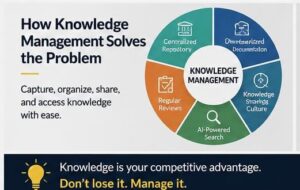
Knowledge management transforms scattered information into a reliable organizational resource. Instead of depending on individual employees to retain critical knowledge, organizations create structured systems where expertise is captured, organized, and easily accessible. This ensures valuable information remains available even as teams grow and change.
Centralized Knowledge Repository- centralized knowledge repository provides employees with a single source of truth. Policies, procedures, templates, training materials, and best practices are stored in one searchable location, making information easier to find and maintain.
Standardized Documentation-Clear documentation standards prevent knowledge from becoming inconsistent or incomplete. Whether documenting customer processes or internal workflows, a structured format improves accuracy and usability.
Knowledge sharing culture-Technology alone cannot preserve organizational knowledge. Companies must also encourage employees to regularly share insights, lessons learned, and best practices so expertise becomes part of the organization’s collective knowledge.
Ai-Powered Search- Artificial intelligence makes organizational knowledge significantly easier to access. Employees can ask questions in everyday language and instantly receive relevant documents, procedures, or answers.
Regular Knowledge Reviews-Maintaining knowledge is just as important as creating it. Scheduled reviews keep documentation reliable and prevent outdated information from affecting daily operations.
Preparing Before employees leave

Knowledge retention should begin long before an employee submits a resignation. Organizations that continuously capture expertise experience smoother transitions, faster onboarding, and fewer operational disruptions when employees leave.
Connection Between Knowledge Management and Ai
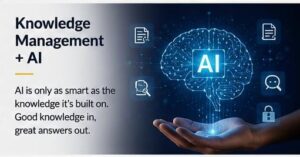
Many organizations invest in AI without first organizing their internal knowledge. As a result, AI systems generate inconsistent or incomplete responses because they rely on fragmented information. Knowledge management provides the trusted foundation AI needs to perform effectively.